
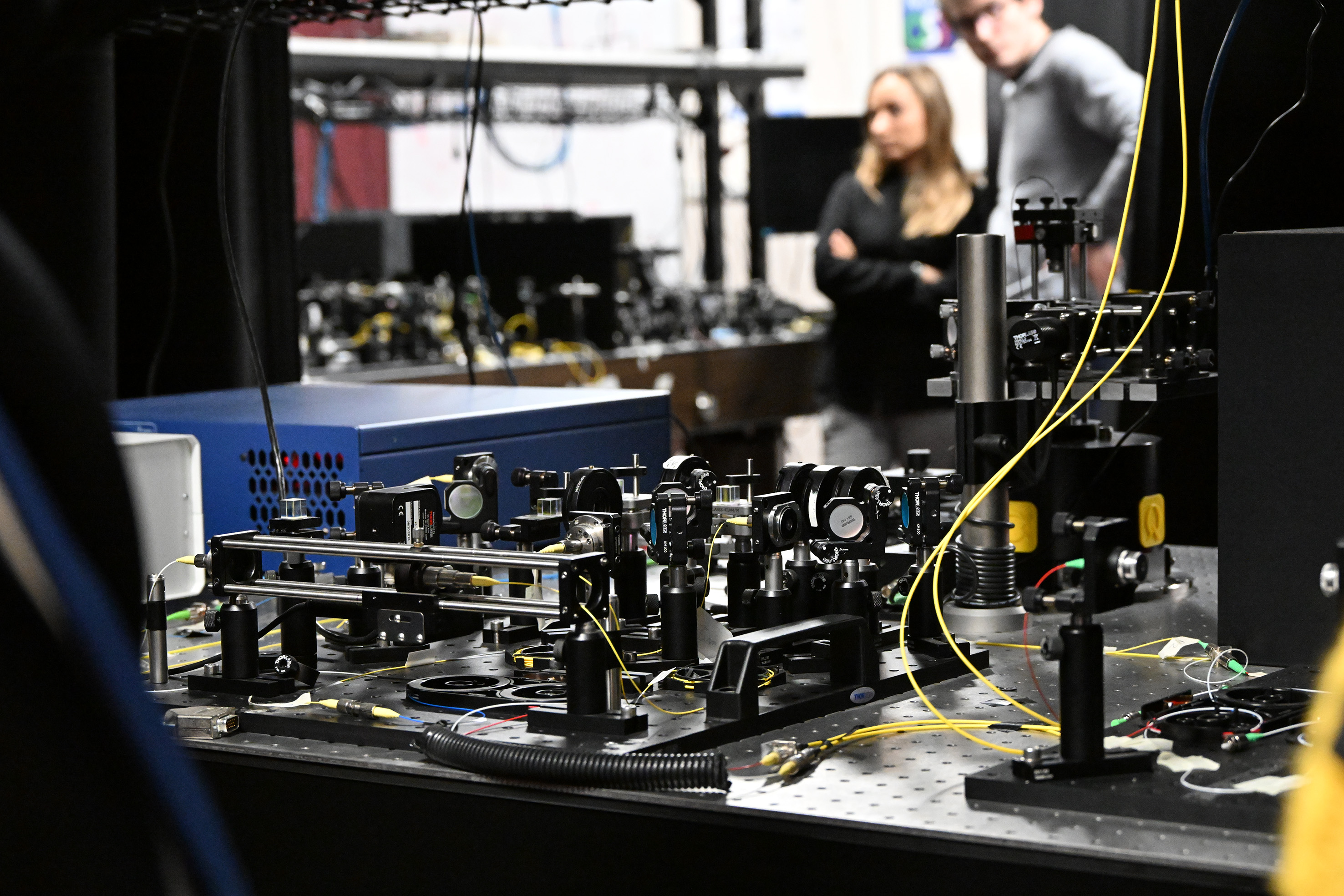
Qolossus2.0 is an innovative type of quantum computer that exploits the properties of light quanta. This approach allows the system to operate at room temperature and makes it naturally compatible with quantum communication networks, which also rely on photons to transmit information.
In addition to standard qubits, the platform can process higher-dimensional quantum units, known as qudits, enabling a more efficient encoding of information and opening new perspectives for quantum algorithms and applications.
The core processor consists of integrated photonic circuits fabricated in Italy using advanced laser- based nanofabrication techniques, while quantum light sources are generated on dedicated chips and connected via optical fibers.
Research is the most authoritative language that Italy and Europe can speak in the world, and it is a language based on verifiable results, transparent processes and our country's unique ability to combine scientific tradition, cultural vision and civic responsibility", emphasises Sapienza Rector Antonella Polimeni.
Qolossus 2.0 is a significant step forward in the development of an alternative type of quantum computer based on photons as computing units. It was developed as part of the National Research Centre for High Performance Computing, Big Data and Quantum Computing initiative (PNRR ICSC), coordinated by Sapienza University of Rome at the Quantum Lab.
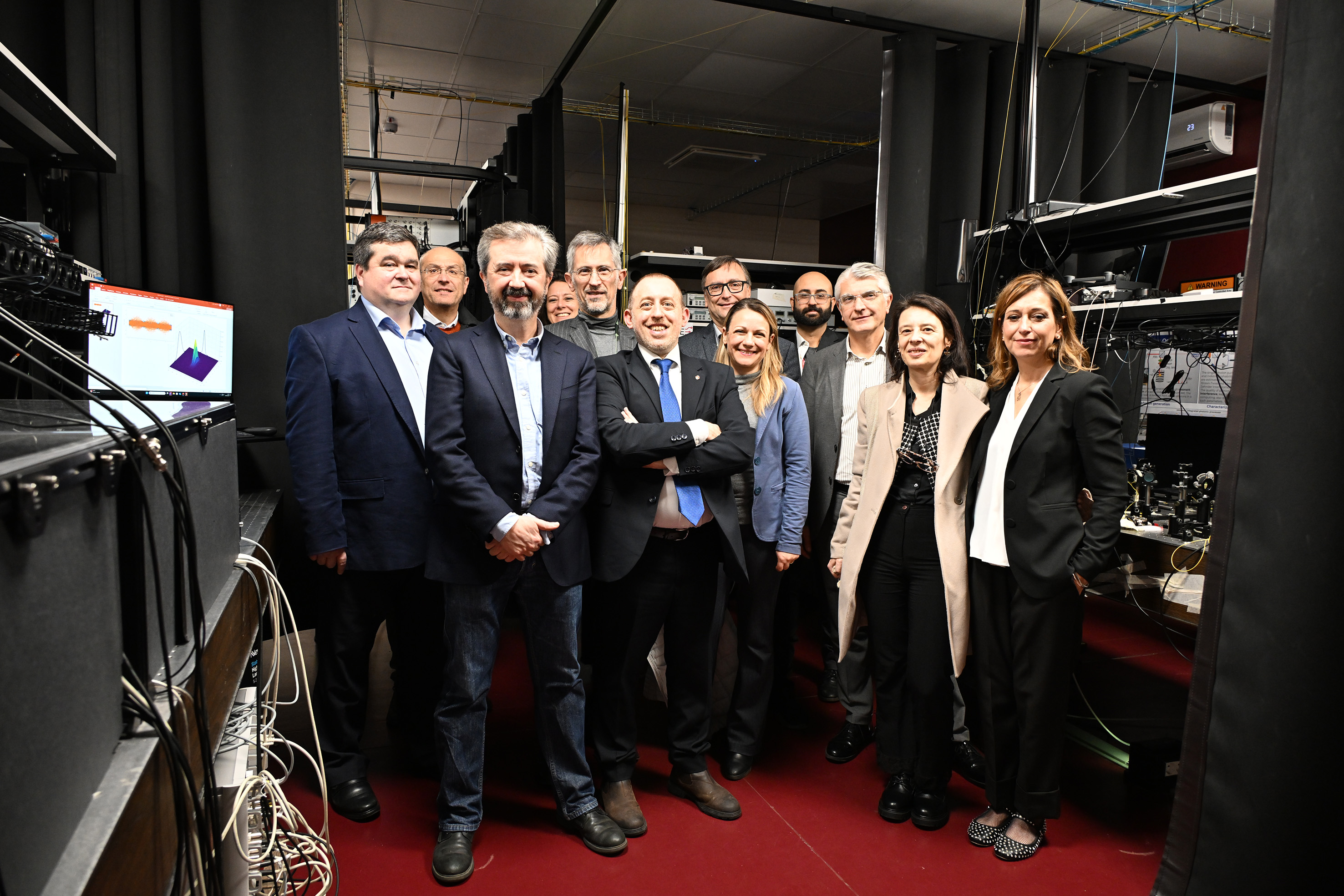
Contributions also came from research groups at the Institute of Photonics and Nanotechnology of the National Research Council in Milan, and the University of Pavia.
Latest Highlights:
Compostable circuits could slash environmental impact of electronics
Major study involving the University of Bucharest rewrites the history of European dinosaurs
Pathogen hijacks fruit ripening program in citrus plants
Antarctic expedition searches for clues to future sea-level rise