
Litter in the Rhine River: some 53,000 items of litter flow past Cologne daily
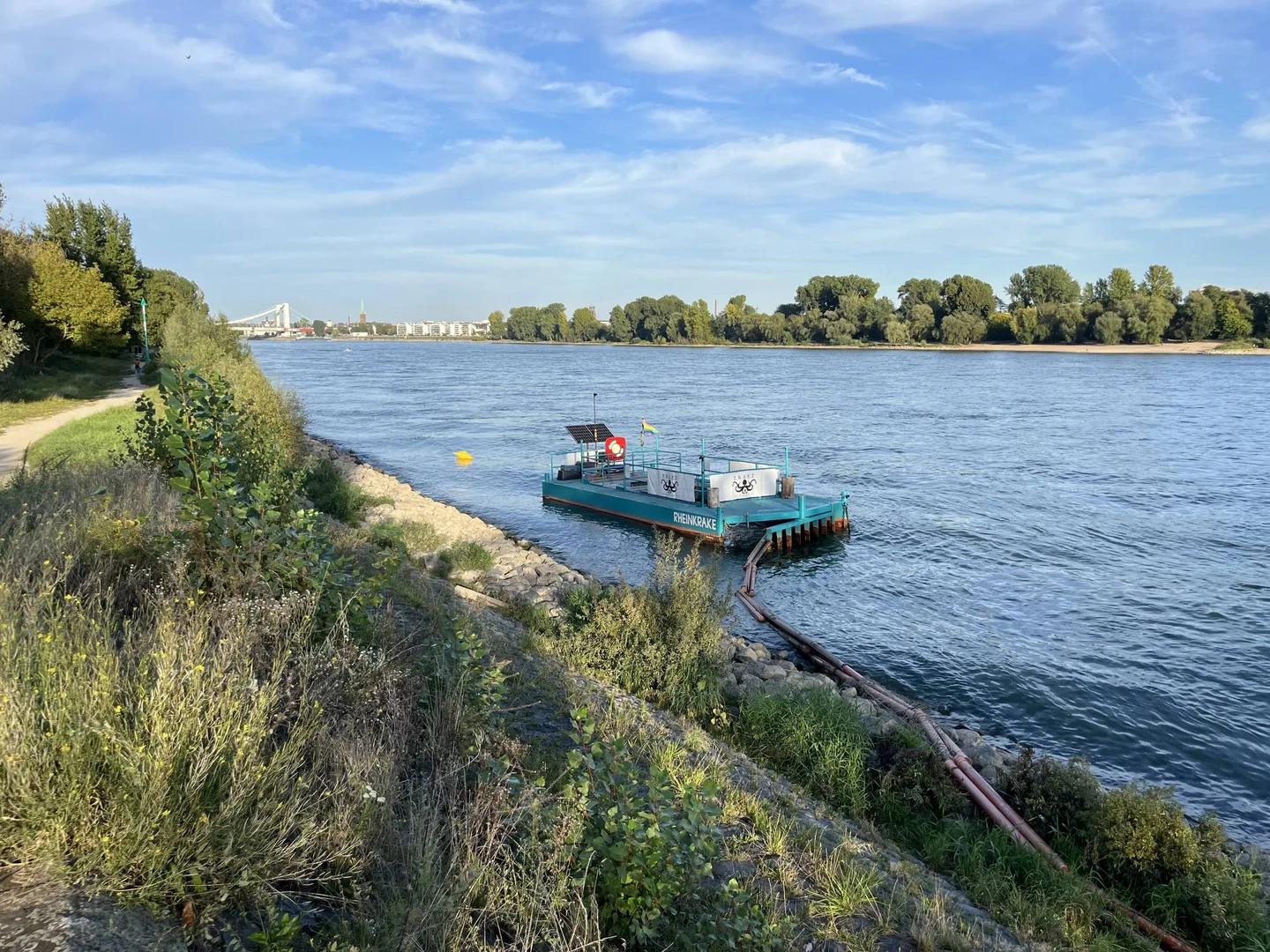
Researchers from the University of Bonn, the University of Tübingen and the Federal Institute of Hydrology (BfG) partnered with the Cologne-based non-profit pollution-fighting organization K.R.A.K.E. to collect and classify macro litter in a floating litter trap - the only one of its kind in Germany - over a period of 16 months. Extrapolation models based on the observed volume indicate that roughly 53,000 items of macro waste debris float past Cologne on the Rhine river every day.
The oceans, filled with millions of tonnes of litter
It is impossible to quantify exactly how many tonnes of anthropogenic litter are in our oceans, but estimates suggest it is several millions. And more litter is added every year. A large part of this volume flows into the oceans via rivers.
In previous studies, visual macro litter observation was a common method to get a reliable ballpark estimate of the actual litter volume, but this has only been done occasionally in the Rhine. In the past, this has mainly involved watching the litter floating past from a bridge. In this case you can easily imagine that some debris will go unnoticed and some things are floating deeper down. Now, we are using a more reliable, continuous and long-term monitoring process“, says Dr. Leandra Hamann from the Institute for Organismic Biology at the University of Bonn.
Some 20,000 bits of waste collected in 16 months
Dr. Hamann supervised the citizen science part of the litter trap project in which the researchers and volunteers from the organization systematically collected and classified macro litter floating in the Rhine over a 16-month period. This was done using the RheinKrake - a floating litter trap installed in 2022 near the Zoobrücke bridge in Cologne. Spanning three meters of the river, the litter trap captures individual items of debris and garbage which are larger than one centimeter, down to a depth of 80 centimeters.
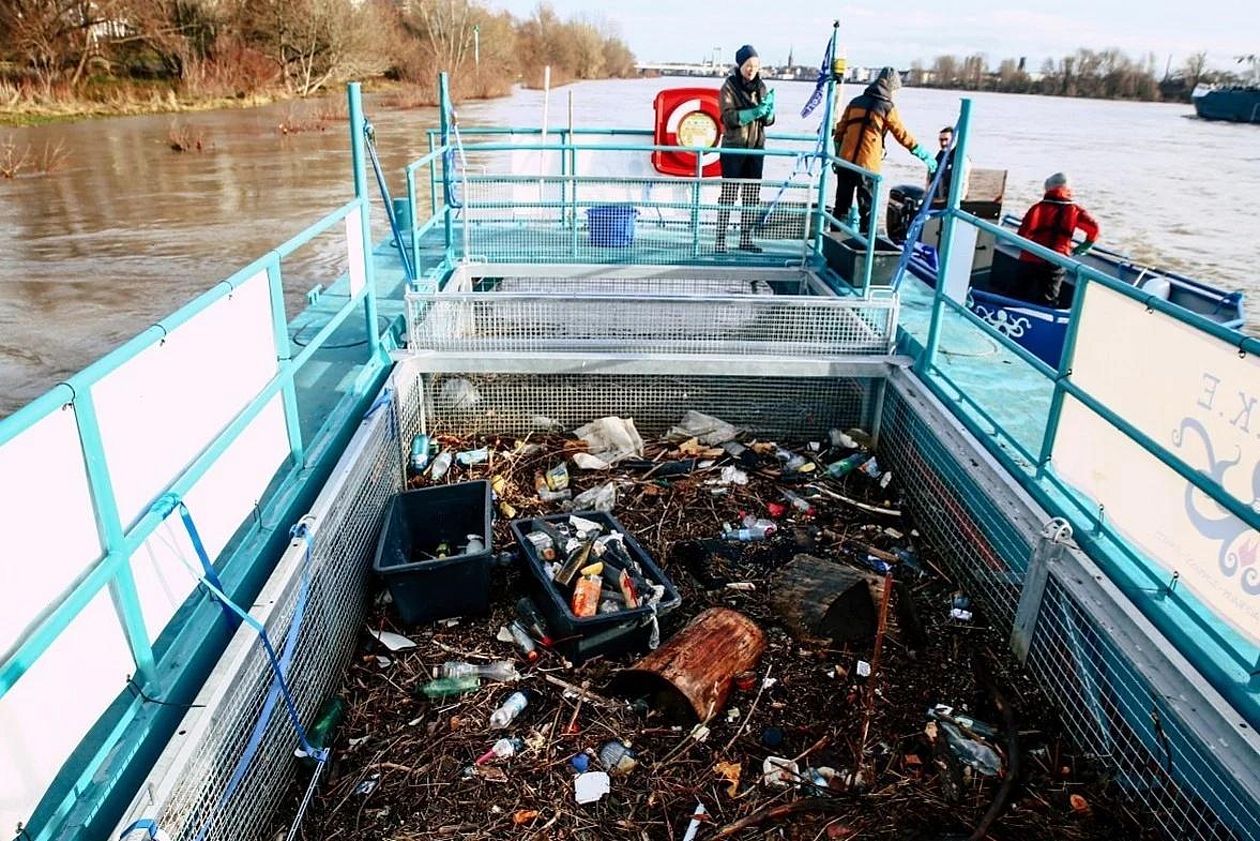
RheinKrake initiator Nico Schweigert discussed the project background: “The idea behind the RheinKrake was to reduce the amount of litter that ends up in the Wadden Sea nature reserve and other places, while raising awareness among the responsible authorities.”
A long measurement period was a highly important project feature, as well as measurements being taken day and night.
Over 2 tons of litter per year
Relying on a host of volunteers, between September 2022 and January 2024 20,339 macro waste items were collected and classified in accordance with international standards, falling into 183 litter categories within nine material types.
Extrapolated to the total volume, this amounts to approximately 53,000 pieces of litter passing through Cologne per day in the linear scenario. This corresponds to a total weight of 2,169 tons per year. Weighted scenarios reach values of up to 3,391.8 tons of waste per year in the Rhine in Cologne.
Extrapolated to the entire Rhine, this is 22 to 286 times higher than previous estimates from other studies,” says Hamann. “Plastic accounts for 70% of macro litter items, but less then 15% by weight—the weight difference being attributable to textiles, glass, ceramics and other man-made materials polluting our waters.”
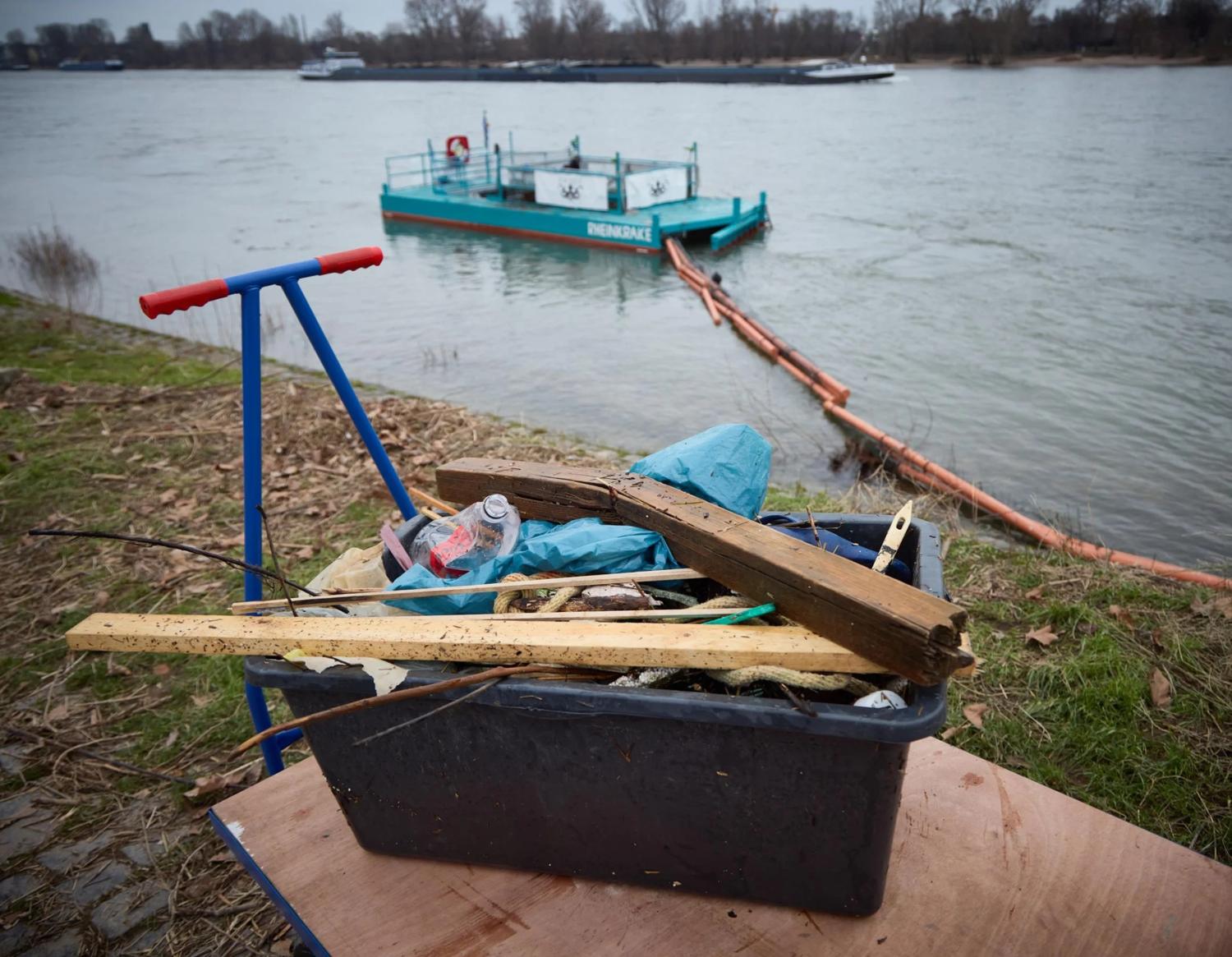
Analysis reveals that consumer items are the main source of macro litter, comprising over 50 percent of the total. Such items include wooden sticks used in fireworks, glass bottles and plastic caps from beverage bottles. The team often finds fragmented items, for example made of foamed or unfoamed plastic, where it is no longer possible to tell what it originally was without closer study.
Study leads to action recommendations
The researchers have derived a number of action recommendations based on the obtained data.
“Disposable products account for 40% of the collected litter - more than half of which is plastic,” relates Katharina Höreth of the University of Bonn Department of Geography. “But reusable products made up less than 8%; the rest was not clearly identifiable.” Making bottles and packaging part of the deposit scheme could reduce the amount of litter in rivers on a sustained basis.
Another thing revealed by the RheinKrake project is that macro litter volume varies greatly at different times in the year, ranging from around 70 to over 2,700 litter items per trap emptying.
On New Year’s Day, for example, the Rhine carries away remains of fireworks, and we have also observed garbage left behind on the banks of the Rhine being washed into the river when water levels rise”, says researcher Nina Gnann of Tübingen’s Department of Geosciences
This could be avoided to a significant extent, the researchers have pointed out, by targeted cleanup campaigns and making sure that trash bins are emptied before the water level rise.
Latest Highlights:
SUR's modular photonic computer is now fully operational
Compostable circuits could slash environmental impact of electronics
Major study involving the University of Bucharest rewrites the history of European dinosaurs
Pathogen hijacks fruit ripening program in citrus plants
Antarctic expedition searches for clues to future sea-level rise